-
What Are the Characteristics of Art Deco Jewelry
-
Beyond the Shape: Filigree and Milgrain Details to Create a Vintage Feel
-
Popular Art Deco Diamond Shapes: Emerald, Baguette, and Asscher Cut Diamonds
-
Antique, Vintage, or Inspired? How to Know Exactly What You’re Buying
-
Find an Art Deco Ring With Confidence at Ellis Jewelers in Concord, NC
Looking for an engagement ring that truly stands out? One with a romantic backstory and show-stopping, elegant beauty? If so, you might want to consider stepping back in time. The ring of your dreams could be hiding among the many vintage treasures of the Roaring Twenties.
Engagement rings from the 1920s are more than just vintage pieces of jewelry. They’re miniature works of art. And even if you can’t find a true vintage Art Deco engagement ring, many current jewelry designers create beautiful, modern-day designs heavily inspired by the Art Deco movement.
But when looking for a ring in the Art Deco style, it’s important to know exactly what to look for. In this guide, we’ll walk you through what makes the Art Deco style so unique, how to select a vintage–or vintage-inspired–ring, and give you a buyer’s checklist to help you purchase an Art Deco ring with confidence.
What Are the Characteristics of Art Deco Jewelry?
The Art Deco movement extended beyond jewelry to all facets of art and architecture in the 1920s and early 1930s. The bold, vibrant designs were inspired by optimism for the future and the exciting technological advances of the time. The spirit of Art Deco is all about sharp lines, clean symmetry, and vivid color.
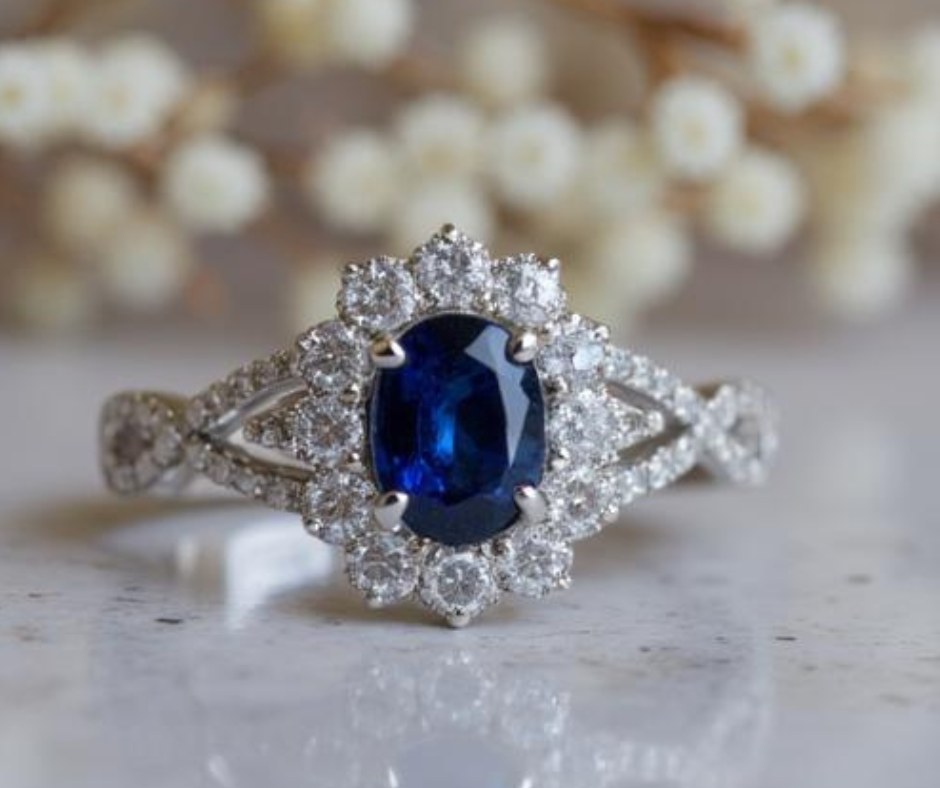
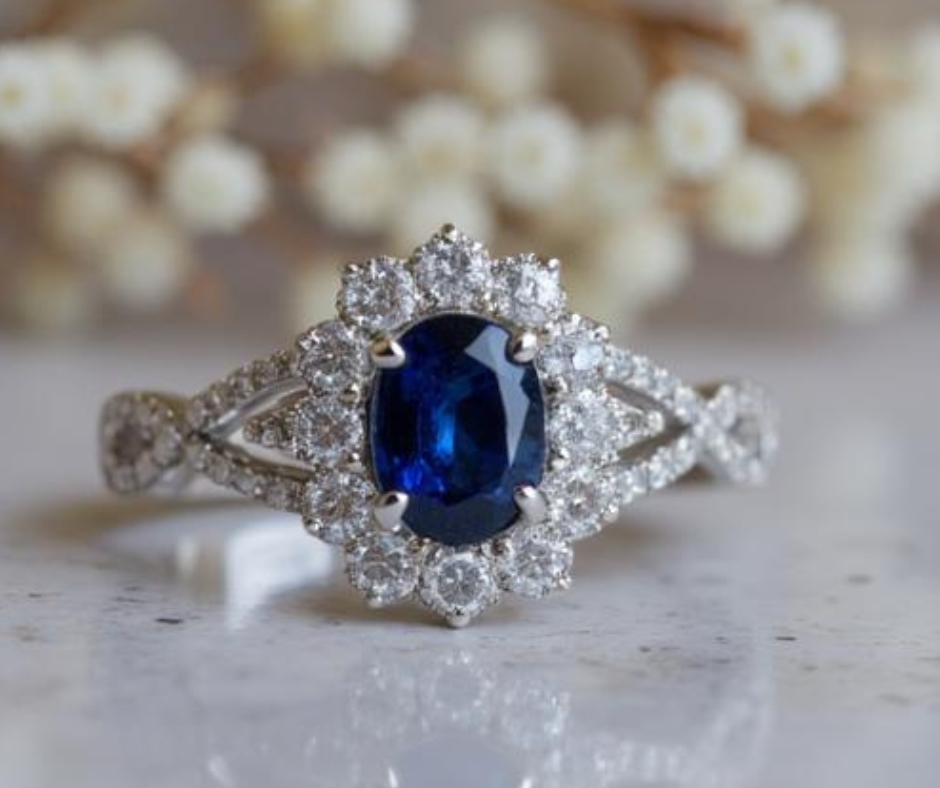
Instead of the gentle curves that grace many modern engagement rings, Art Deco engagement rings feature striking shapes that frame the central stone, creating gorgeous aesthetics. These signature forms are often called “geometric halos,” and they create stunning, geometric design diamond rings.
Another major characteristic of Art Deco jewelry is balance. This design movement valued symmetry–a style you can see very clearly in architecture from the era. The Empire State Building is perhaps the most famous example. If you were to draw a straight line through the Empire State Building, each of the two sides would look like perfect mirrors of each other. Art Deco rings possess that same feature. The obsession with symmetry gives these rings a very intentional and elegant look. No design choice goes to waste on an Art Deco ring–everything is exact and meticulous.
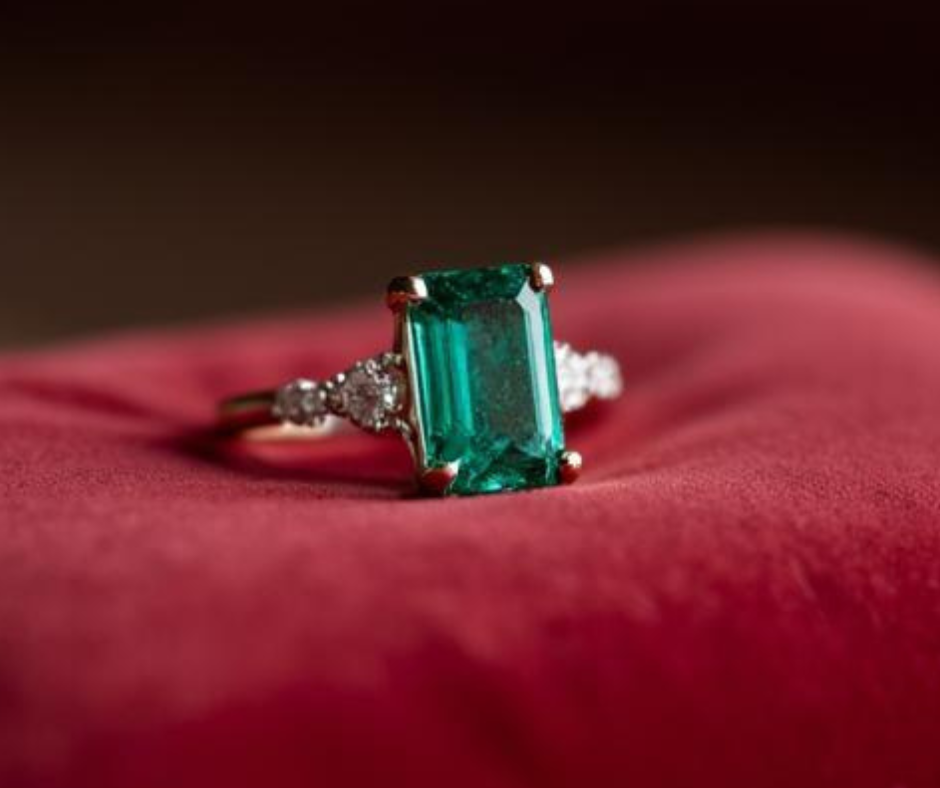
Finally, Art Deco rings often boast daring color. Designers of this era loved creating high contrast designs by pairing brilliant white diamonds with rich, deeply colored gemstones. Believe it or not, diamonds were not always the most popular stone for engagement rings. They grew in popularity throughout the 20th century, but gemstones remained central to many engagement rings designed throughout the 1920s and 1930s. Classic sapphire and diamond halo designs were very popular, as were pairings with vibrant green emeralds and breathtaking black onyx. Symmetry, clean lines, and bold color all work together in these Art Deco rings to create a timeless and glamorous look.
With that being said, some Art Deco and Art Deco-inspired engagement rings feature only sparkling white diamonds. You can choose or customize your ring depending on your personal preferences regarding color.
Beyond the Shape: Filigree and Milgrain Details to Create a Vintage Feel
Although bold geometry may be the defining feature of an Art Deco ring’s shape, there’s more vintage beauty in the details. Look closely at a vintage or vintage-inspired Art Deco ring and you’ll often find delicate, lace-like metal designs woven into the setting. The elegant design technique of twisting fine metal threads into intricate patterns is called filigree. Filigree accents bring elaborate artistry and a delicate airiness to these otherwise bold Art Deco rings.Often found alongside filigree are borders made of tiny, raised metal beads. This unique design touch is called milgrain. It adds a soft element to the ring’s texture and also shimmers beautifully under the light.
These elements do more than just decorate. They signify the exceptional craftsmanship and artistry of this design era. Filigree and milgrain accents balance bold design with a sense of playful lightness, resulting in a beautiful finished product that is difficult to replicate.
Popular Art Deco Diamond Shapes: Emerald, Baguette, and Asscher Cut Diamonds
As with any design era, Art Deco jewelers had their preferred diamond shapes. While you can find Art Deco and Art Deco-inspired designs featuring many different diamond shapes, including round and oval diamonds, a few diamond cuts were especially popular: emerald, baguette, and Asscher.Emerald Cut Diamonds
This is an elongated, almost rectangular diamond shape with angled corners. Emerald cut diamonds are faceted differently than round or oval diamonds. Facets are the tiny geometric planes cut into the diamond to refract light and give the diamond its sparkle. While round diamonds feature many tiny facets angled to bounce light off many planes, step cut diamonds feature long, open, parallel facets. This gives the diamond a glassier look, which some describe as a “hall of mirrors” effect.Baguette Cut Diamonds
Baguette cut diamonds come in two shapes. One is a true rectangle with sharp, squared-off corners, unlike the emerald cut, which features angled corners. In a tapered baguette, the sides taper inwards as you approach one end of the diamond. Baguette diamonds are more commonly used as accent stones than center stones. Like emerald cut diamonds, baguette cut diamonds are step faceted.Asscher Cut Diamonds
Asscher cut diamonds look like a squatter version of the emerald cut diamond. While emerald cuts are elongated, the Asscher cut is more square; however, it still has the same angled corners as the emerald cut. It also features step faceting, creating a glassy look similar to that of the emerald and baguette cuts.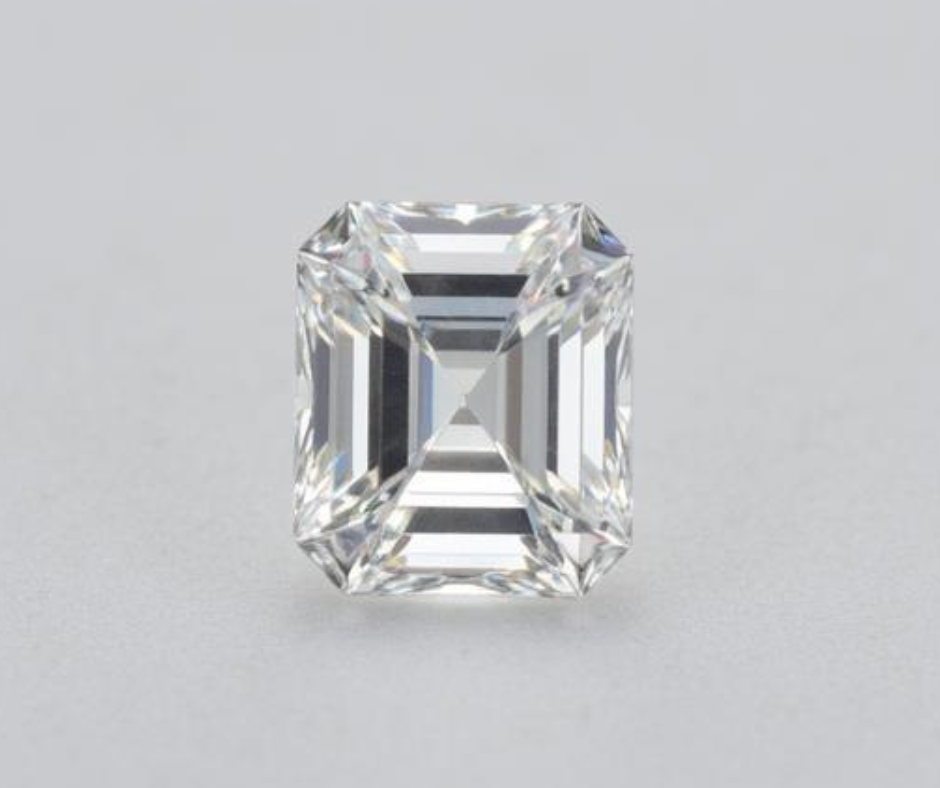
These diamonds all have something in common: they’re bold, geometric shapes with striking faceting. They match the broader aesthetic of the Art Deco era. Even today, Art Deco-inspired designs often feature these diamonds, either as center stones or accent stones.
Antique, Vintage, or Inspired? How to Know Exactly What You’re Buying
Many modern rings capture the Art Deco style even if they aren’t from that era. Knowing the difference can help you select a ring from the era you’re looking for, whether it’s a true vintage piece of a beautiful vintage-inspired ring.To start your search with confidence, keep these industry-standard definitions in mind:
Antique Jewelry
A true period piece that is over 100 years old. This means that authentic antique Art Deco rings must have been crafted in 1926 or earlier.Vintage Jewelry
An older piece, typically between 50 and 99 years old. Most rings from the 1920s and 1930s are still considered true Art Deco rings, but after that–while they may count as vintage rings–they don’t qualify as being from the Art Deco era.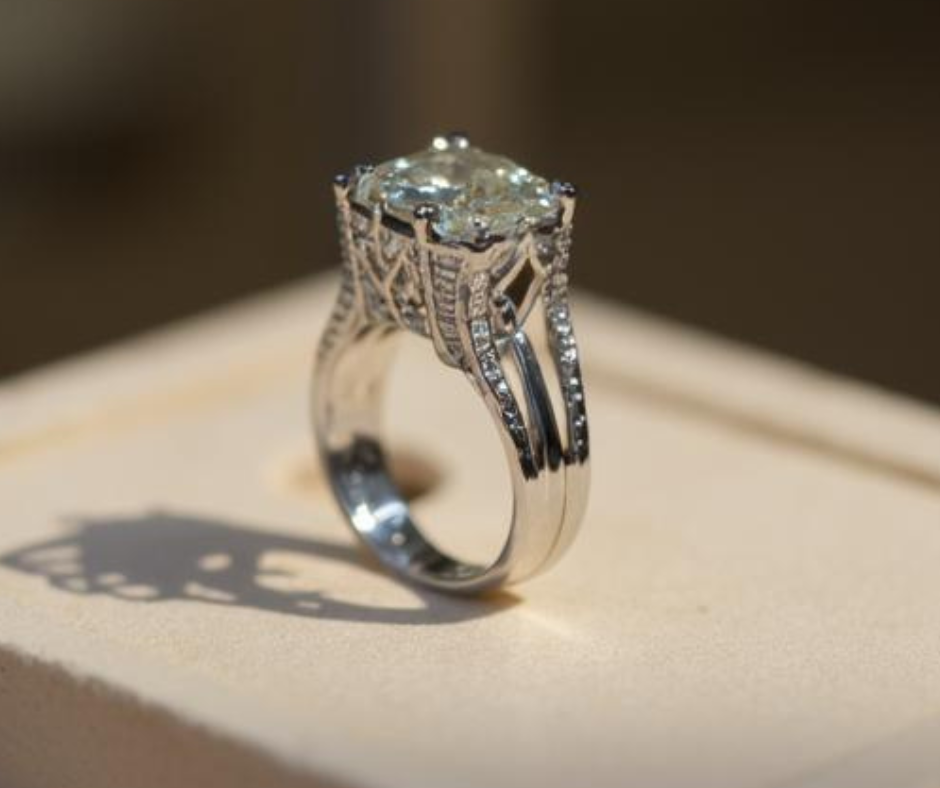
Inspired or Reproduction Jewelry
A brand-new ring that mimics the Art Deco aesthetic. These modern pieces offer flawless construction and a similar aesthetic, but don’t carry the same backstory as a true vintage or antique ring.Choosing between an antique, vintage, or inspired piece is a personal decision. Modern reproduction rings will be in pristine condition, but antique or vintage rings come with their own romantic past. The decision boils down to what is most important to you. There’s no right or wrong answer.
Jewelers who sell estate (pre-owned, pre-loved) jewelry can tell you the age of their pieces. And if you’re ever unsure how old a ring you purchased somewhere really is, bring it to a trusted local jeweler who can help you determine the true age of a piece.
Find an Art Deco Ring With Confidence at Ellis Jewelers in Concord, NC
You’ve now unlocked the language of a romantic, bygone era. While “old rings” might have once blended together in your eyes, you can now see the distinct signature of Art Deco and Art Deco-inspired rings. The sharp geometry, bold color contrasts, and delicate but symmetrical metalwork are telltale signs that you’re looking at a ring made in or inspired by this design era.As you begin your search, we hope you use this knowledge to find a ring that speaks to you. Among all the beautiful Art Deco engagement rings out there, the perfect one will feel like a natural part of your story. Here at Ellis Jewelers, our experts would love to help you find the ring of your dreams. At our downtown Concord, NC store, we will help you find the right ring for your style and budget–whether it’s a true antique or a modern recreation. We hope you’ll pay us a visit to start your shopping journey.